
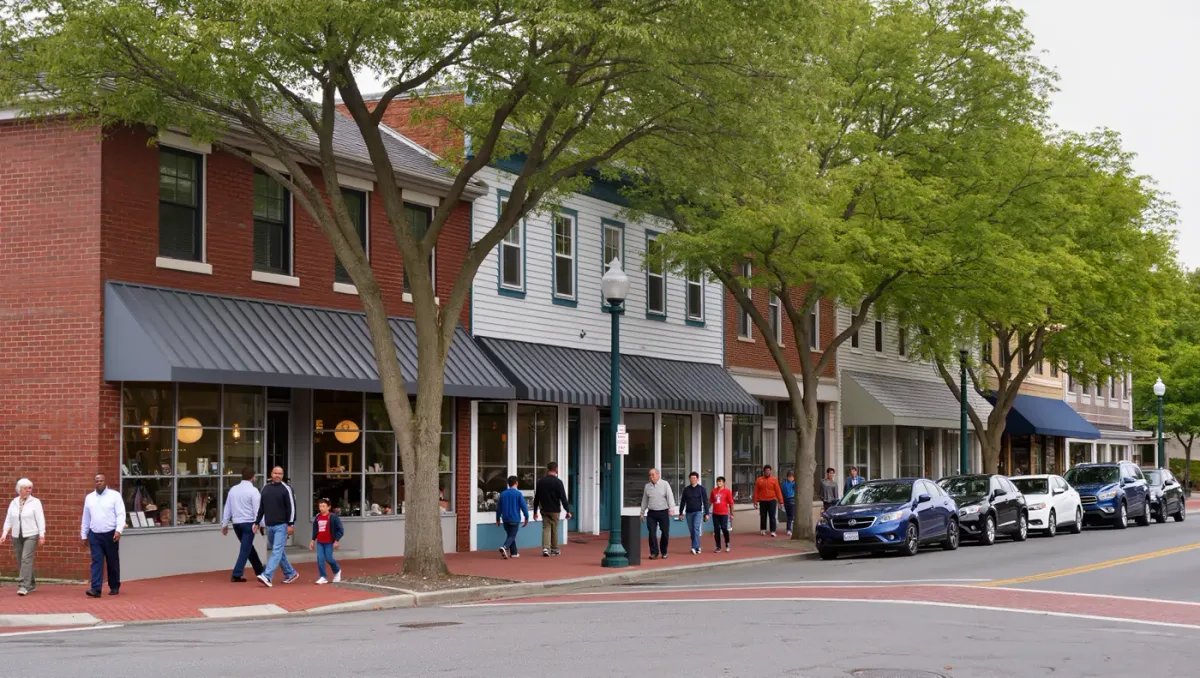
Rockland County's downtowns are not one story but five. Nyack's Main Street runs on independent shops and a long-standing arts draw. Suffern centers its business life on Lafayette Avenue and the train station. Haverstraw rebuilt its New Main Street around its village status and waterfront. Spring Valley's Memorial Park corridor serves a dense, transit-dependent community, and Pearl River ties its downtown to NYU Langone's campus and a rebuilt main street. Understanding how each corridor is organized — and how chambers of commerce and business improvement districts work behind the scenes — explains why some storefronts turn over quickly and others have anchored their block for decades.
What counts as a downtown business district in Rockland?
A downtown business district is the stretch of a village or hamlet where retail, restaurants, services, and offices cluster, usually along one or two state or county roads. In Rockland those corridors follow old turnpike and rail geography: Main Street in Nyack, Lafayette Avenue in Suffern, New Main Street in Haverstraw, Memorial Park Drive in Spring Valley, and Central Avenue and the shops around the rail line in Pearl River.
These corridors predate the Palisades Center and the big-box buildouts along Route 59. That older street grid shapes how business works there: small parcels, upper-floor apartments above stores, curbside parking, and foot traffic that depends on nearby residents rather than highway exits.
Nyack: Main Street and the independent retail mix
Nyack has the county's best-known downtown, a compact grid between the Hudson and Route 9W. Its business mix leans heavily on independents — bookstores, restaurants, galleries, and antique and gift shops — rather than chains, which gives the corridor a regional draw on weekends. Events along Main Street and the waterfront, including the long-running street fairs and farmers' market, bring customers who then spread into side streets.
The Nyack Chamber of Commerce acts as the corridor's main civic voice, coordinating promotions, holiday events, and communication with the village board on parking and zoning questions. Because Nyack is a village with its own code, changes to signage, outdoor dining, or façades route through village hall, and the chamber often serves as the collective negotiating table for merchants.
Suffern: Lafayette Avenue and the commuter anchor
Suffern's downtown sits where Lafayette Avenue crosses the Port Jervis Line tracks, and the station defines its economy. Commuters bring morning coffee and evening dinner traffic, and the village has paired that foot traffic with a dense grid of storefronts on Lafayette, Chestnut, and Washington avenues.
The Suffern Chamber of Commerce runs the corridor's marketing calendar, including its well-attended street fairs that close Lafayette Avenue to cars several times a year. Village government handles parking lots and permits, which makes the relationship between the chamber and the trustee board a standing negotiation over meter rates, lot use, and special events.
Haverstraw village: New Main Street's comeback
Haverstraw's village center has spent two decades rebuilding from the decline that followed the closure of its brickworks and the construction of mall retail elsewhere in the county. New Main Street today mixes long-standing Latino-owned restaurants and bodegas with newer cafes and waterfront-oriented development on the parcels leading toward the Hudson.
Haverstraw is also one of the few Rockland villages that has used the business improvement district model. A BID is a legal district where commercial property owners vote to levy a small additional charge on themselves, and the money funds services inside the district — cleaning, lighting, marketing, decorations, and advocacy. New York State law, under General Municipal Law Article 19-A, sets out how a municipality forms a BID, and the state Department of State publishes guidance for the process.
Related stories: Nyack leads a steady run of Rockland County restaurant openings in early 2026 · Hook Mountain, Nyack and the riverfront: how the Hudson pays Rockland County's small businesses.
Spring Valley: Memorial Park Drive and a dense customer base
Spring Valley's downtown serves one of the most densely populated communities in the county, which changes the business math. The corridor along Memorial Park Drive and Main Street runs on high everyday foot traffic: groceries, clothing, phone services, restaurants, and professional offices that rely on customers who walk or take Rockland Coaches and Transport of Rockland buses rather than drive.
The village has cycled through redevelopment plans and code enforcement campaigns aimed at stabilizing the corridor, and the Ramapo Chamber of Commerce covers merchant interests there along with the rest of the town. For business owners, the practical reality is a district where low rents are balanced by older building stock and a heavier permitting and inspection load.
Pearl River: a downtown rebuilt around the hospital campus
Pearl River's business district, centered on Central Avenue and the streets near the NJ Transit station, got a structural lift when NYU Langone's Rockland campus on the former Lederle site grew into a major employer. The downtown's customer base now includes hospital staff on lunch breaks and shift changes, alongside commuters and town residents.
The Pearl River chamber tradition — including the long-running St. Patrick's Day parade that draws a county-wide crowd each March — gives the corridor a marketing engine most hamlets its size lack. Orangetown town government handles most of the permitting, since Pearl River is a hamlet rather than an incorporated village.
What does a chamber of commerce actually do?
A chamber is a voluntary membership nonprofit, not a government agency. In Rockland's downtowns it typically runs four functions: marketing the district through events and directories, lobbying local government on issues like parking and zoning, hosting networking that connects merchants to each other, and serving as the first call a new business owner makes when figuring out local rules. Membership dues fund the work, and membership is optional — which is why corridor issues sometimes lack a unified merchant voice.
How does a BID differ from a chamber?
The difference is money and mandate. A chamber depends on voluntary dues; a BID collects a compulsory assessment from every commercial property in its mapped district and must deliver the services its founding plan promises. BIDs answer to their municipality and report annually on spending. New York has used the model since the 1980s, mostly in New York City, but smaller cities and villages statewide — including in Rockland — have adopted versions of it. A BID does not replace a chamber; where both exist, the chamber handles promotion and networking while the BID funds physical services.
Why does it matter to shoppers and residents?
These governance structures decide the visible details of a downtown: whether the sidewalks get swept, whether the holiday lights go up, whether a restaurant can add a sidewalk table, and who answers when merchants have a complaint. A resident who wants a stronger downtown has more leverage than they might think — chamber membership meetings, BID boards, and village board public comment sessions are all open doors where corridor priorities get set.