
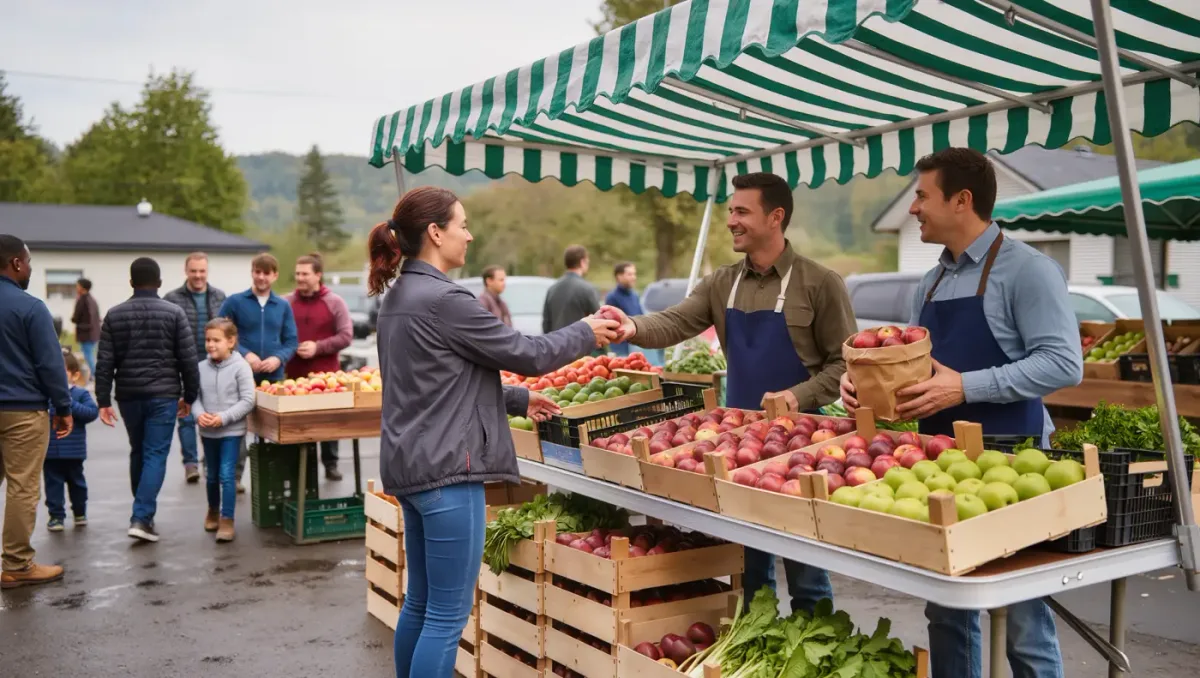
Western Rockland County's farms are businesses first, and increasingly sophisticated ones. Along Route 210 in Sloatsburg, on the hillside orchards above Pomona, and across the New Hempstead and Wesley Hills countryside, family operations that once survived on wholesale produce now earn across four or five revenue lines at once: farm stands and markets, pick-your-own seasons, agritourism events, school and camp visits, and hard cider or bakery products that stretch the harvest into year-round sales. The pattern across the county's western edge shows how a small farm near the largest consumer market in America stays profitable without growing in acreage — by growing in what it sells per acre.
Which farms anchor western Rockland?
The best-known operations cluster in the town of Ramapo's agricultural pockets. Dr. Davies Farm in New City — technically just over the border in Clarkstown — has run its pick-your-own strawberry and apple seasons for generations on land farmed by the Davies family since the 1830s, making it one of the region's standard references for generational farming. In the northwestern corner, Concklin's orchards off Route 45 in Pomona and the Rockland Farm areas near New Hempstead carry a similar multi-generation history, while the Sloatsburg and Hillburn side of the county keeps hay fields and horse properties in the Ramapo valley corridor.
These are not hobby farms. They employ seasonal crews, run retail operations with cash registers and insurance and health inspections, and negotiate with the town of Ramapo and Clarkstown over the zoning that protects — or pressures — their land.
How does a pick-your-own season actually make money?
Pick-your-own flips the economics of harvest. Instead of paying a crew to pick and wholesaling the crop at commodity prices, the farm charges customers a premium to do the picking themselves and absorbs almost no labor cost on the fruit that leaves in their hands. The customer visit also sells everything else at the stand: pies, cider, donuts, hayride tickets. A strawberry season in June and an apple season from September into October bracket the calendar, and each weekend of good weather in those windows can out-earn weeks of wholesale volume.
The trade-off is weather risk and crowd management. A rainy June weekend costs a pick-your-own farm customers it cannot recover, which is why successful operations diversify into greenhouse spring openings, fall festivals, and indoor bakery sales that hold revenue when the fields are mud.
What is agritourism, and how big is it here?
Agritourism is any farm revenue built on the visit rather than the crop: hayrides, corn mazes, school field trips, farm dinners, wedding barns, and holiday events. New York State tracks the category in its agricultural census, and it has grown statewide as small farms supplement commodity income. In Rockland, the county's position inside the New York metro area makes the math unusually favorable — millions of potential day-trippers live within an hour, and Rockland's farms offer the closest orchard experience for many of them.
Local farms have built their event calendars accordingly: spring berry openings, summer stand season, an intensive September-October festival run, and December tree and holiday sales. School districts across the county send classes to farm tours each fall, a steady weekday revenue line that costs the farm little beyond staffing.
Related stories: The commuter economy: how the NYC grind shapes Rockland's business day · Hook Mountain, Nyack and the riverfront: how the Hudson pays Rockland County's small businesses.
How do farmers' markets fit the business model?
Farmers' markets give Rockland farms retail access to the county's downtowns without their own storefront. The Nyack farmers' market, Suffern's market, and other seasonal markets in New City, Piermont, and Pearl River charge vendors a stall fee and draw customers that the farm then converts to its own loyal buyers. For a small grower, a Saturday market stall functions as a marketing channel as much as a sales one — regulars from the market follow the farm's social media out to the stand for the pick-your-own seasons.
The markets are also small business incubators in their own right: bakers, beekeepers, and specialty producers use market stalls to test products before investing in wholesale or storefront operations.
The stand and the ciderhouse
Beyond the fields, value-added products carry the business through winter. Farm bakeries, hard cider made from seconds-grade fruit, preserves, and holiday greenery extend the selling year and raise the revenue per bushel. A crate of apples wholesaled might fetch commodity pricing, while the same crate sold as cider, pies, and school-tour cider samples multiplies the return — the quiet accounting logic behind every cider donut counter in October.
What threatens farm economics in Rockland?
Land pressure comes first. Farms sit on some of the most development-adjacent acreage in the New York suburbs, and every estate sale raises the assessed value pressure on the parcels next door. New York's agricultural districts program, administered under state Agriculture and Markets Law, gives working farms property tax relief in exchange for staying in production, and local land trusts have purchased development rights on some Hudson Valley farms to keep them farming. Labor is the second squeeze — seasonal crews, rising wages, and housing costs affect orchards the same way they affect restaurants. And weather risk grows heavier each season, from late frosts to storm damage that a single pick-your-own weekend cannot absorb.
Why does it matter to the rest of the county?
Open farmland is infrastructure the whole county uses without a bill: the scenic gateway on Route 45, the school field trip destination, the Reasonably Priced pumpkin by October. County tourism marketing leans on the farm seasons, downtown markets draw shoppers who also spend in Nyack and Suffern shops, and the western Ramapo countryside defines the character that keeps residential values high. When a Rockland farm earns across five revenue lines instead of one, the profit margin is what keeps the land undeveloped — which makes every cider donut sold in Pomona a payment toward the county's open space.