
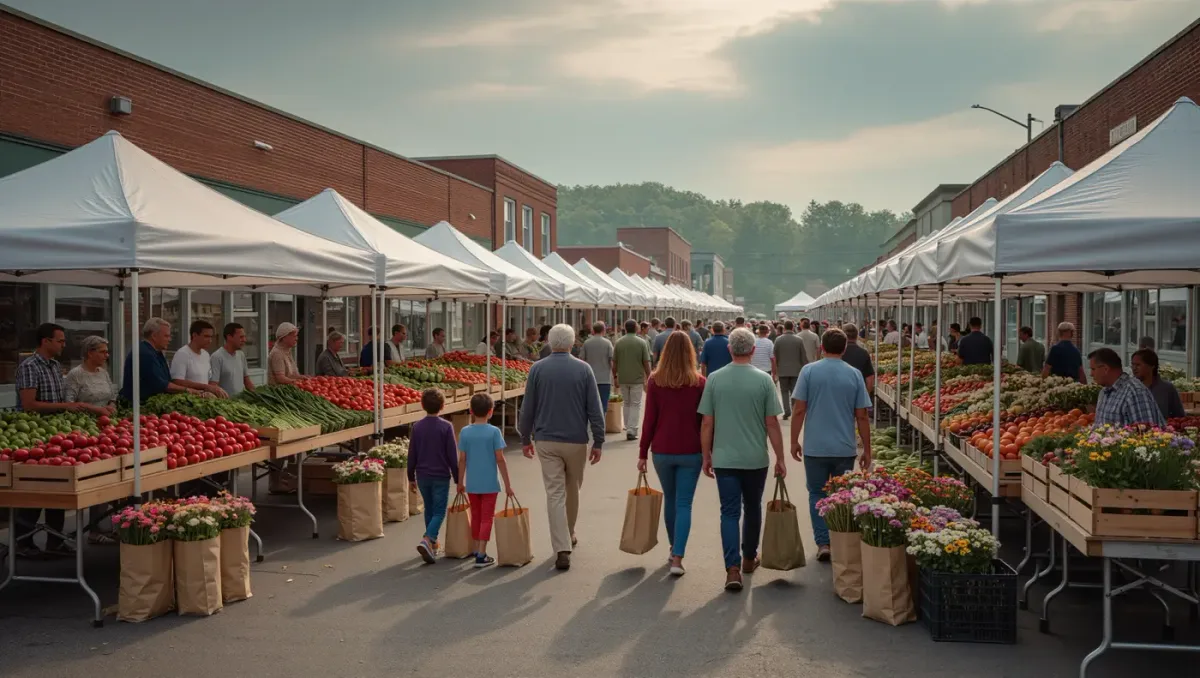
Rockland County does not have one big farmers market. It has a circuit of them — Nyack, Suffern, Pearl River, New City, Haverstraw and Spring Valley each run their own weekly market during the warm months, typically on a fixed day of the week that repeats all season. Exact opening dates change from year to year because each operator sets its own calendar, but the structure of the season is predictable enough to plan a summer shopping routine around.
Which towns run markets, and on what days?
The county's best-known markets generally follow this recurring pattern, with each operator announcing its own dates each spring:
- Nyack — a downtown market that typically operates on Thursdays through the growing season, drawing shoppers to Main Street and the surrounding blocks.
- Suffern — the village's Lafayette Avenue market, traditionally a Saturday fixture and the largest drawing radius in western Rockland.
- Pearl River — a market aligned with the hamlet's downtown, typically on a weekend day during summer.
- New City — a market serving the county seat, historically operating midweek or on weekends depending on the season's operator.
- Haverstraw — a river-village market, typically tied to the village's downtown and waterfront event calendar.
- Spring Valley — a market serving the village's dense residential base, often with an emphasis on affordable staple produce.
The reliable move is to treat the day of the week as fixed and the calendar dates as variable. A Thursday market is a Thursday market all summer; whether it starts the first week of June or the second is a decision the operator announces each year.
Who actually runs each market?
There is no county-wide market office. Some markets are run directly by a village government, some by a downtown or business association, and some by a private market management company hired by the municipality. That matters to shoppers for one practical reason: it determines where the authoritative information lives. A village-run market publishes its season through village channels; a managed market publishes through its own website and social media. Before you plan a trip, check the current season's dates rather than last year's.
The management model also shapes the vendor list. Markets that emphasize local agriculture limit how far vendors can travel and require that sellers grow or make what they sell. Markets that allow some artisan and prepared-food vendors trade a little purity for a bigger draw — coffee, empanadas and cut flowers next to the sweet corn.
What typically sells through the summer?
The product mix follows the Hudson Valley growing season, and it shifts month by month in a pattern that holds across the county:
- Opening weeks — greens, radishes, seedlings for home gardens, honey and stored apples from the previous fall.
- Midsummer — the peak: tomatoes, sweet corn, berries, stone fruit from Hudson Valley orchards, peppers, cut flowers and eggs.
- Late summer into fall — apples, cider, winter squash, potatoes and the season's closing-week deals.
Alongside the produce, most Rockland markets carry baked goods, bread, pickles, sauces, fish and coffee, and a few add soap, plants or crafts. Markets generally require that food be grown or produced by the seller rather than resold wholesale — that rule is what separates a farmers market from an outdoor flea market.
Related stories: Winter holiday events in Rockland's towns: how tree lightings, holiday markets and menorah lightings come together · Rockland County's summer concert series: how the schedules come together and what to know before you go.
How do SNAP and WIC dollars work at the tents?
Every major market in Rockland is set up to accept SNAP EBT, and the mechanics are the same statewide. You swipe your EBT card at the market manager's table — not at the vendor tents — for the amount you want to spend, and you receive tokens or scrip to spend with participating vendors. Tokens generally cover SNAP-eligible foods: produce, eggs, bread, dairy and other staples. Not every vendor accepts them, so look for the posted signs at participating tents.
WIC works through a different channel. The New York State Farmers' Market Nutrition Program issues WIC and Senior FMNP vouchers to eligible participants, and those vouchers are spent directly with authorized farm vendors — usually for fresh fruits and vegetables — rather than converted at the manager's table. WIC participants receive FMNP checks as part of their seasonal benefits, and seniors receive them through county aging-services distribution in summer.
On top of both programs, New York runs incentive programs in many seasons that stretch SNAP dollars at markets, such as Fresh Connect Checks, which provide matching coupons for produce purchases at participating markets. Which markets participate, and at what match level, changes by year — the manager's table is the place to ask.
What about weather and cancellations?
Rockland's markets are outdoor operations, and summer thunderstorms are the main disruptor. Most operators make a go/no-go call the morning of market day and post it on social media; a handful of markets with covered locations stay open in light rain. Vendors typically lose the day when a market cancels — there is no rain date for a weekly stall — so a canceled Saturday in Suffern means those farms are at a different market the following week, not the same one.
Heat matters too. In July and August, the earliest hour of the market is the coolest and the best stocked; by the final hour, popular vendors are selling out. Families with young children tend to learn this quickly.
How to build a summer market routine
A few habits make the circuit work for your household:
- Pick one home market and learn its manager's table — that is where EBT, incentives, and vendor questions get answered
- Check the operator's current-season announcement each spring for start dates and hours before assuming last year's calendar
- Bring bags and small bills; some vendors are cash-first even where cards are accepted at the table
- Ask vendors what is peaking this week — they will steer you to the crops at their best rather than the prettiest display
Between them, the county's markets put a market day within a short drive of nearly every Rockland household, from the Nyack riverfront to downtown Suffern. Confirm each season's dates with the operator, and the day-of-week rhythm does the rest.