
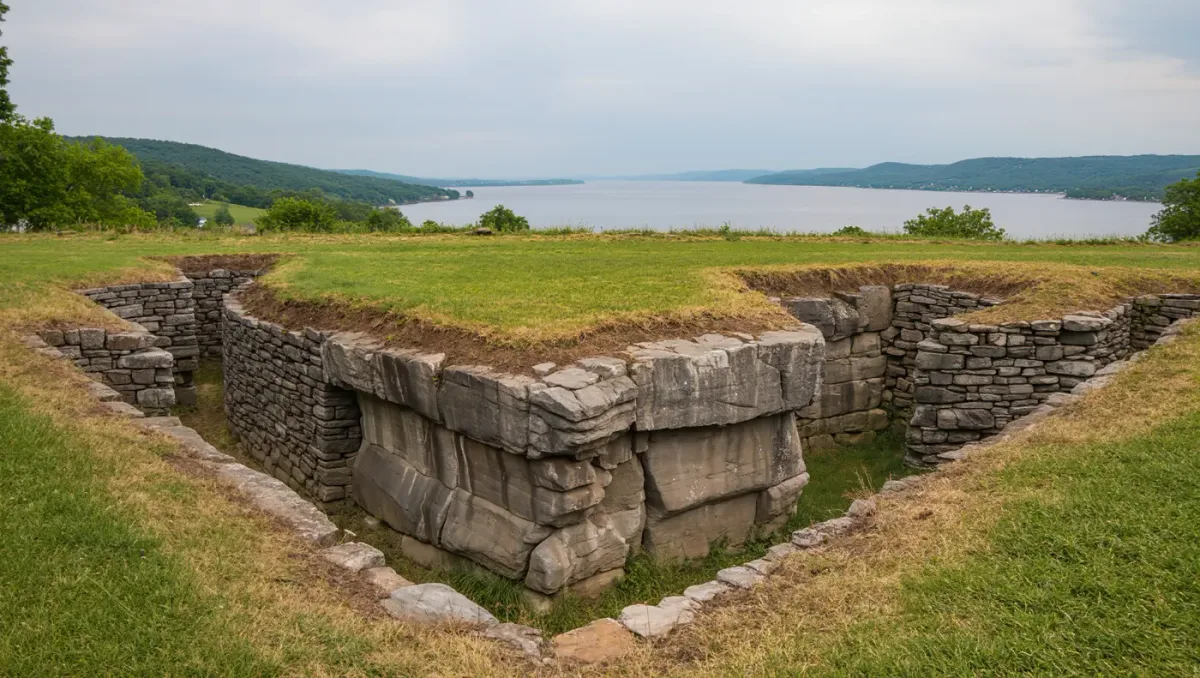
Stony Point Battlefield State Historic Site preserves the ground where, on the night of July 15-16, 1779, American light infantry under Brigadier General Anthony Wayne stormed a British post on a rocky promontory above the Hudson River. Today the site is a day-use park in the Town of Stony Point, run by the New York State Office of Parks, Recreation and Historic Preservation, and it pairs Revolutionary War history with one of the oldest lighthouses on the Hudson.
Here is what visitors can see, when the site is open, and how it is managed.
What happened at Stony Point in 1779?
British forces had fortified the point earlier that year as part of their control of the Hudson. Wayne's Continental light infantry attacked just after midnight with unloaded muskets and fixed bayonets, relying on surprise and silence across the causeway and rocky slopes. The assault carried the position in roughly half an hour, and Washington's Continental Army held the point only briefly afterward — but the victory was a morale lift for the American cause and a demonstration that British fortifications were not untouchable.
The battlefield's small size is part of the experience. Visitors can walk the ground of the entire fight in a short loop, which makes the site unusually easy to picture.
Why did both armies want this ground?
The point controlled shipping on the lower Hudson. Whoever held it could threaten British supply lines to New York City, and the British capture of the fortifications at Stony Point and Verplanck's Point across the river in May 1779 tightened their grip on the river corridor. Washington's decision to strike back at Stony Point was as much about strategy as morale: proving the river posts were vulnerable had value even if the Americans abandoned the ground soon after taking it.
Wayne's approach through swampland and up the heights, with orders to rely on bayonets alone so a premature musket shot would not give away the attack, became the story generations of Rockland schoolchildren learned. The site's museum interprets that night in detail, including the roles of local guides and the light infantry units involved.
What is there to see at the site today?
The park includes a museum with exhibits on the battle and the area's history, walking trails that pass British and American defensive lines, and interpretive signs explaining the assault's route. The Stony Point Lighthouse, built in 1826, stands near the entrance grounds; it is recognized as the oldest lighthouse on the Hudson River and is open for tours at scheduled times during the season.
Grounds offer picnic areas, a boat launch on the river, and views up and down the Hudson. Living history events, including battle reenactments and colonial-era demonstrations, are scheduled in warmer months, with the anniversary weekend in July the busiest date on the calendar.
Related stories: How volunteer fire departments in Rockland County work, and how to join one · Senior centers in Rockland County: programs, rides and who qualifies.
Who operates the site?
Stony Point Battlefield is one of the historic sites in the Palisades region administered by the New York State Office of Parks, Recreation and Historic Preservation, which manages it alongside neighboring state parks such as Bear Mountain and Hook Mountain. Day-to-day operations — staffing, programming, and maintenance — fall to state park staff, supported by volunteer groups and friends organizations that help with events and preservation work.
Because the battlefield is a state historic site, changes to the grounds and museum go through state historic preservation review, and the site is listed on the National Register of Historic Places.
When is the site open?
The site follows a seasonal schedule: grounds and museum generally open in spring, remain open through the summer and fall, and close for the winter, reopening in mid-April. Hours are typically daytime only, and the museum and lighthouse tours run on limited days and times. Because dates shift year to year, check the state parks website or call before planning a winter or early-spring visit.
Admission has historically been free or low-cost, with some special events carrying a fee. Parking is on site, and the entrance road leads up from Park Road in the Town of Stony Point.
What should families and history visitors know before going?
Wear walking shoes — the trails include rocky and uneven sections, and the defensive earthworks sit on slopes. The full trail loop is short enough for most children, and the museum gives the context that makes the earthworks legible. Leashed dogs are generally permitted on the grounds. Bug spray earns its place in summer, and the exposed point can be windy in any season.
Visitors interested in the wider history should note that the site also interprets the area's post-war story, including the lighthouse keepers who ran the light through the nineteenth century.
Are there events worth planning around?
Yes. The July anniversary weekend is the marquee date, usually with a battle reenactment and encampments on the grounds. Through the season, the site runs living history demonstrations, lighthouse tours, and children's programming, and some evenings feature lantern tours that use the dark grounds to good effect. Event dates are published on the state parks calendar before each season, and popular events can fill the parking area by late morning.
How does the site fit into the rest of Rockland County's history?
The battlefield anchors the Town of Stony Point's Revolutionary War story, alongside nearby sites like the Birthday of Washington's headquarters trail network at Bear Mountain and the county's other Hudson crossings. For a day trip, the battlefield combines naturally with the Palisades parks corridor: history in the morning, river views and a picnic in the afternoon.