
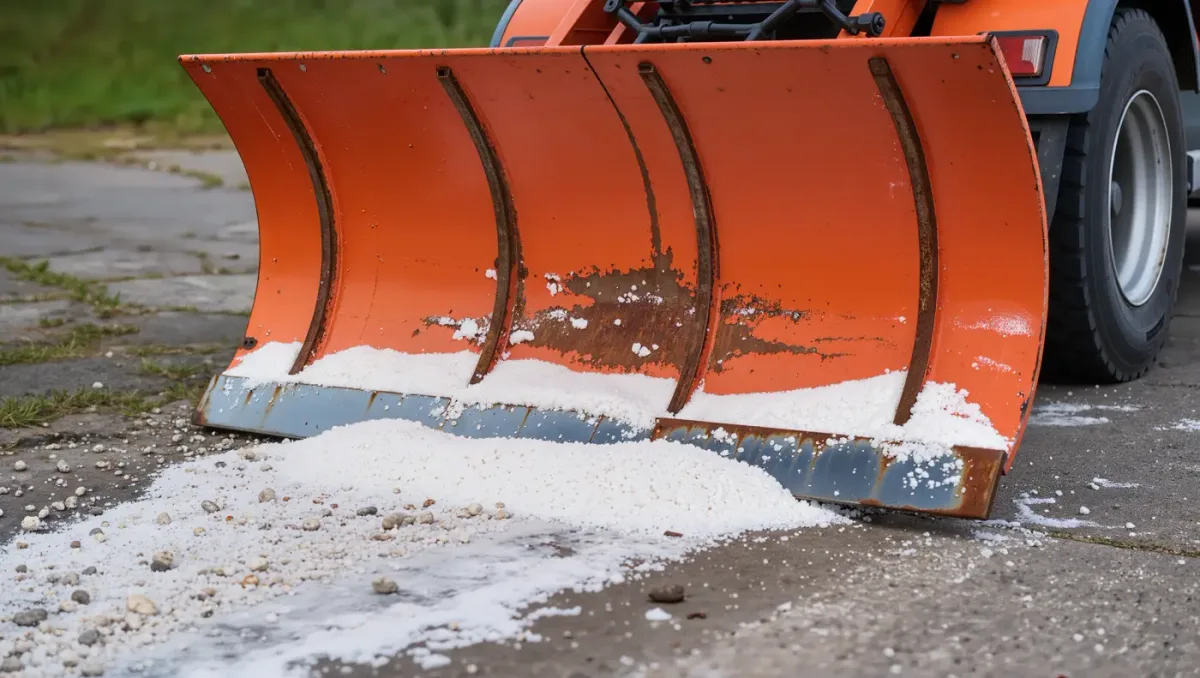
Orangetown's highway department is the crew behind nearly everything residents notice about the town's roads: snowplowing after a storm, pothole patching on Western Highway, leaf pickup in the fall and the storm drains that keep Pearl River basements dry. It is one of the largest line items in the town budget, and it is run by an elected highway superintendent who answers to voters every two years under New York's town law.
What the department actually maintains
The department's core job is keeping roughly the town's network of town-owned roads passable in every season. That breaks into a few familiar categories:
- Winter operations: plowing and salting town roads, with crews on shifts through storms and priority routes — emergency access and main connectors — cleared first.
- Paving and repair: annual repaving programs, pothole patching, shoulder grading and driveway aprons disturbed by road work.
- Drainage: catch basin cleaning, culvert repair and ditch work, which prevents the road failures that cost far more later.
- Seasonal work: leaf collection, brush pickup, street sweeping and roadside mowing.
- Storm cleanup: downed trees and washouts, often coordinated with Orange and Rockland Utilities when lines are involved.
State and county roads — the New York State Thruway approach roads, Route 303, county arteries — are the state DOT's and the county highway department's job, not the town's. Residents sometimes report the same pothole to three levels of government; the road's owner determines who fixes it.
How the highway budget is built
Each fall the highway superintendent prepares a budget request and the town board adopts the final number as part of the overall town budget, subject to New York's property tax cap rules. The biggest costs are predictable: salaries and overtime for the crew, heavy equipment and its maintenance, and materials — road salt, blacktop, fuel — whose prices swing with the market. Salt is purchased under county and state cooperative bidding contracts, which pools demand across municipalities and lowers the per-ton price.
The adopted budget is a public document on the town's website, and the line items — personnel, equipment, road materials, snow removal — are what the town board debates at its budget workshops. Capital purchases like a new plow truck usually appear as separate bond or equipment resolutions voted on at a regular board meeting.
Where the money comes from
Highway work is funded mostly by the town's property tax levy, but not entirely. New York distributes revenue from the state's motor vehicle registrations and fuel taxes to towns through CHIPS — the Consolidated Local Street and Highway Improvement Program — which reimburses qualifying road work. The town also receives PAVE NY and Extreme Winter Recovery allocations in some years, and can take in additional revenue from franchises and shared-service agreements. When a storm season is brutal, overtime and salt costs can push spending past appropriations, and the board covers the gap in a budget amendment voted in public.
Related stories: How a village budget gets made in Rockland: from the treasurer's draft to the board's final vote · What the Rockland County executive can — and cannot — do.
Who runs it and who answers for it
New York towns elect a highway superintendent to a two-year term, so the department's leadership changes only at elections — a structure that keeps road decisions close to residents but also means the superintendent and the town board must negotiate each budget. The board controls the appropriation; the superintendent controls operations. When residents ask why one road was plowed before another, the answer lives in the town's designated priority route maps, which the department maintains and can be requested through the town.
Reporting a problem the right way
Because three levels of government own different roads in Orangetown, a report goes further when it starts with the right office. Town roads — most residential streets in Pearl River, Orangeburg, Tappan, Blauvelt and Nyack — belong to the highway department, which takes requests by phone and through the town's website. Potholes on state routes belong to the DOT; county roads go to the county highway department in New City.
Specific reports work better than general ones: an address or nearest cross street, a description of the problem and, for drainage issues, whether water is standing or moving. During storms, departments ask residents to stay off the phone lines except for genuine hazards, because crews are working from priority route lists that clear emergency access first.
What a storm actually costs
A single significant snowstorm costs a town highway department days of overtime, tons of salt and heavy wear on equipment, which is why snow budgets are built on multi-year averages rather than one winter's experience. A mild season leaves money on the line-item; a brutal one forces a budget amendment. Residents who follow the board minutes in March and April will see those amendments voted on in public, with the overrun amounts stated in the resolution.
Paving follows the same rhythm on an annual cycle. The superintendent ranks road segments by condition, a repaving list is built within the appropriation, and the award is voted as a contract resolution — usually in late winter or spring, ahead of the paving season. If you want to know whether your street is on the list, the resolution describing the paving contract is the public record that answers it.
How to follow the spending
Three records tell the story. The adopted town budget shows what was planned. The town board's minutes show mid-year amendments, equipment purchases and salt contract approvals. And the annual audit report, filed with the state comptroller's office each year, shows what was actually spent. All three are available through the town — the budget and minutes on the website, the audit through the town supervisor's office or the comptroller's public reports. Reading a single year end to end is the clearest way to see where your highway tax dollars went.