
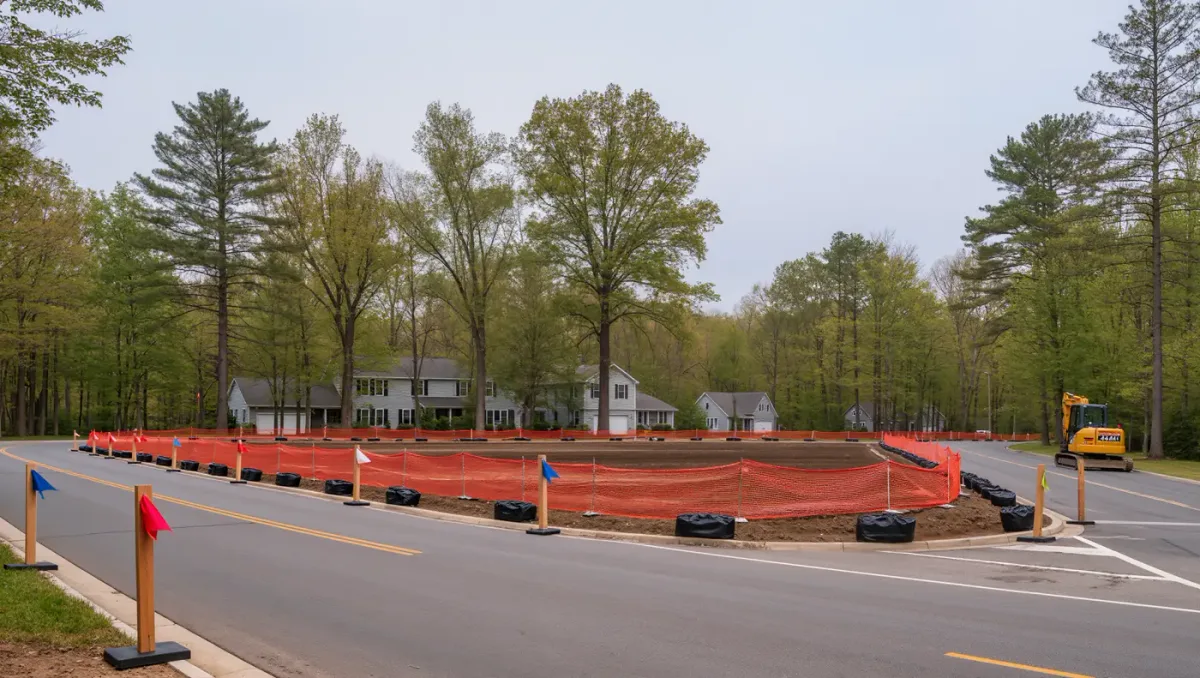
When a shopping center is rebuilt in Clarkstown, a subdivision is carved out of a lot in Stony Point, or a mixed-use building rises near the Suffern train station, the decision runs through a town planning board. These volunteer boards approve three main things: site plans, subdivisions, and special permits — and almost everything else in the process, including the months of waiting, exists to feed environmental review under New York's SEQRA law.
Each Rockland town — Clarkstown, Ramapo, Orangetown, Haverstraw, and Stony Point — runs its own planning board under its own zoning code, so timelines and names vary. But the anatomy of an approval is similar enough that one walkthrough covers all five.
The three approvals planning boards issue
A site plan approval governs how a building or use sits on a specific piece of land: parking counts, driveways, drainage, lighting, landscaping, signage, and where the dumpster goes. If a developer wants to put a pharmacy with a drive-through on a Route 59 parcel, the planning board reviews the engineering of that parcel, not the wisdom of a pharmacy.
A subdivision approval divides land. Split a two-acre lot into three house lots in New City or New Square, and the board must approve the map — new streets, drainage easements, and whether the resulting lots meet the minimum size in that zone.
A special permit (sometimes called a special exception use) allows a use that zoning permits only under conditions — a house of worship, a daycare, a wireless tower, a drive-through — provided the board finds it will not harm the neighborhood. The planning board judges the fit, not just the blueprints.
Some projects need all three at once. That is one honest reason approvals stretch out: more boxes, more hearings, more review.
Why everything takes months: SEQRA
The State Environmental Quality Review Act requires a board to study the environmental impacts of nearly any discretionary approval before granting it. SEQRA is the clock in the room.
The process starts with a short-form or long-form environmental assessment form filed by the applicant. The board — or a lead agency if several boards are involved — decides whether the project may have significant adverse environmental impacts. If the answer is no, the board issues a negative declaration and moves toward a vote. If the answer is yes or maybe, the board issues a positive declaration, which triggers a draft environmental impact statement, a public comment period, a final statement, and often a year or more of technical back-and-forth on traffic, stormwater, wildlife, and community character.
Large Rockland projects — big residential complexes in Ramapo and Clarkstown are recurring examples — almost always draw a positive declaration. Small projects, like a two-lot subdivision on an existing street, usually clear SEQRA with an unlisted classification and a negative declaration in a meeting or two.
Related stories: Those extra lines on your Rockland tax bill: water, lighting, fire, and sewer districts explained · How a village budget gets made in Rockland: from the treasurer's draft to the board's final vote.
How a project moves from application to vote
- The applicant files with the town planning department: survey, architectural and engineering plans, stormwater pollution prevention plan, and the environmental assessment form.
- Staff review for completeness; the application is placed on a board agenda, often weeks out because agendas fill a month or more in advance.
- The board holds a work session to question the applicant's engineers and set the SEQRA classification.
- If a public hearing is required — it always is for special permits and usually for subdivisions — the board sets a date, and notice is published and mailed to property owners within the required radius.
- The hearing opens and is often kept open across multiple meetings so commenters finish; boards cannot legally close it until everyone has had a chance to speak.
- Under General Municipal Law section 239, projects near county roads, state roads, or municipal boundaries get referred to the Rockland County Planning Department, which reviews and can recommend modifications or disapproval — and a board that overrides a disapproval needs a supermajority vote.
- With SEQRA satisfied and the hearing closed, the board deliberates and votes, attaching conditions such as revised landscaping, traffic improvements, or construction-hour limits.
- The approval is filed, and the applicant returns for inspections or amendments if plans change later.
What planning boards do not decide
Planning boards do not change zoning — that is the town board's job, through a rezoning law subject to its own hearings. They do not grant variances from zoning dimensional rules; that belongs to the zoning board of appeals. And they do not regulate building code construction details, which is the building inspector's jurisdiction once a permit is pulled.
This division explains a common frustration: a board can condition a project on screening and stormwater upgrades but cannot legally make it smaller than the zoning allows, and cannot reject a compliant use in a use-permitted-by-right zone just because neighbors oppose it.
Why your comment matters even so
Within those limits, public comments genuinely shape outcomes. Drainage complaints have produced bigger detention basins; traffic concerns have produced dedicated turn lanes and reduced curb cuts; hearing testimony on lighting has moved fixtures away from bedroom windows. Boards must also keep a record showing they considered public comment before voting — especially in SEQRA reviews, where an ignored, documented concern can become the basis of a lawsuit.
Comments work best when they are specific and land within the board's authority: drainage, traffic safety, noise, hours of operation, buffering, and consistency with the town's comprehensive plan. Speaking to the record at the formal hearing is more useful than raising an issue at a work session, because only hearing testimony is preserved for the decision file.
Where to follow a project in your town
Every Rockland town posts planning board agendas, minutes, and often submitted plans on its website — Clarkstown, Ramapo, Orangetown, Haverstraw, and Stony Point each maintain their own portal, and application files are available through the planning department. Signboards at project sites and legal notices in county papers announce hearings. If a project near you matters, the agenda page is the single most useful bookmark, because agendas show what is coming a month before the hearing notice does.
The short version: planning boards are where Rockland's physical future gets negotiated one parcel at a time, and the months you wait are mostly SEQRA, hearings, and county referral doing their statutory work.