
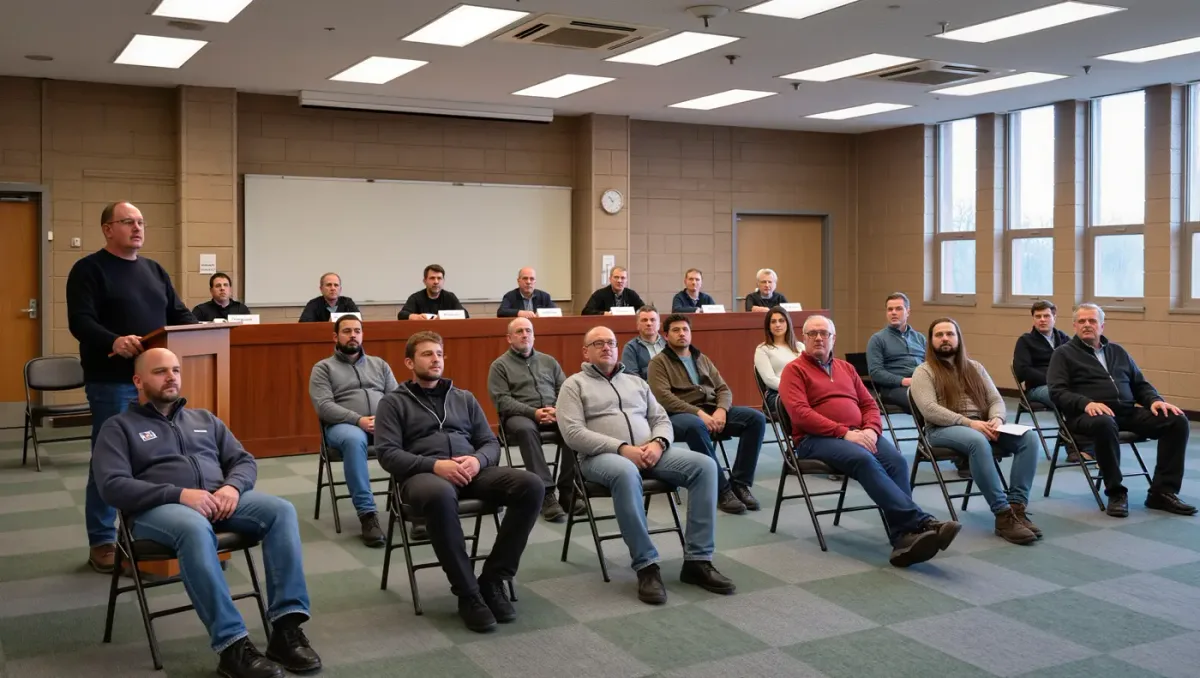
The Ramapo Zoning Board of Appeals is the five-member board that decides whether a property in the town — including the villages that use the town's zoning boards — can be excused from a zoning rule it cannot meet. If you need to build an addition that sits too close to a property line, or run a use the zoning map does not allow, a variance application is the route. The board meets on a published schedule at town hall, and every decision is made in a public hearing with legal notice to neighbors.
Two kinds of variances
New York's town law recognizes two types, and the board must treat them differently. An area variance relaxes a dimensional rule — setbacks, lot coverage, height, parking counts — for a property whose owner faces practical difficulties. A use variance allows a use the zoning does not permit at all, and the legal test is far harder: the applicant must show the property cannot earn a reasonable return under any permitted use, a standard most applications fail.
That distinction explains most outcomes you will see on a Ramapo agenda. Additions, garages, fences in a required setback and generator placements are area variances. Turning a house into a commercial use or adding a business in a residential district is a use variance, and those are rare.
How to file an application
Applications go to the building department, which staffs the board, and must include a survey or dimensioned site plan showing what exists and what is proposed, the specific code sections involved, and the filing fee. Here is the sequence:
- Get the town's variance application from the building department and confirm which code sections you need relief from.
- Prepare the site plan, surveys and any renderings; incomplete applications are not scheduled.
- File with the fee. The building department reviews it for completeness.
- The board sets a hearing date. Property owners within the notified distance get mailed legal notice, and the hearing is published in a newspaper and posted at town hall.
- Attend the hearing, present your case under oath-style questioning, and answer the board's questions about hardship and impact.
- Neighbors speak for or against. The hearing can be closed, or held open for written comments.
- The board votes at the same or a later meeting and issues a written decision with findings, recorded in the minutes and filed with the town clerk.
What the board weighs
For an area variance, state law directs the board to balance the benefit to the applicant against the harm to the neighborhood — looking at whether the problem is self-created, whether a lesser relief would work, and effects on drainage, traffic, neighborhood character and physical suitability of the property. For a use variance, the applicant must show unnecessary hardship on each of the legal tests, which is why boards grant few. Decisions can carry conditions, such as limiting hours, requiring plantings or capping occupancy.
Related stories: The Clarkstown town board, explained: zoning, contracts and where to read the minutes · How a village budget gets made in Rockland: from the treasurer's draft to the board's final vote.
What happens at a hearing in Ramapo
Hearings are public and quasi-judicial: the chair swears in witnesses, the applicant presents first, and board members question directly. Anyone who received notice, or any interested resident, can speak. Neighbors who oppose should point to concrete impacts — drainage, parking, density — because the board's written findings must rest on evidence, not sentiment. Written letters submitted before or at the hearing also become part of the record.
Outcomes appear on the board's agenda and minutes on the town website, and the written decision matters even when you win: a variance runs with the land, is recorded in the chain of title, and typically lapses if the work authorized is not pursued within the time limit stated in the decision.
Villages inside the town
Ramapo contains several incorporated villages, and their residents sometimes file with the wrong board. Villages with their own zoning boards hear their own variance requests; properties in the unincorporated town — and villages that officially use the town's boards — come to the town Zoning Board of Appeals. The building department confirms at intake which board has jurisdiction, and filing with the wrong one costs only a delay, but it is a delay measured in months given notice and hearing schedules.
This is worth checking before paying a fee, especially for properties near a village boundary. A quick call to the building department with the address settles it, and staff can also flag whether your project even needs a variance or can be approved as a permit by right.
Common mistakes that sink applications
Board members and planners see the same avoidable errors every cycle. Applications arrive without a current survey, so the board cannot verify setbacks. Applicants ask for the largest possible addition instead of the smallest relief that solves the problem, which makes the balancing test harder. And some arrive at the hearing with no preparation for the board's questions about drainage, parking or why the condition exists in the first place.
The fix is to keep the request modest and documented. Bring the survey, photos of the property and a short written summary of the hardship. If a contractor is doing the application, attend the hearing anyway — board members direct their questions to the applicant, and an owner who cannot answer them weakens the record. Self-created hardship does not automatically defeat an area variance, but it counts against you.
If you disagree with the decision
The board's written decision can be challenged in state court under Article 78 of the civil practice law, generally within 30 days of filing — a lawyer's question, not a board procedure, but the deadline is short enough that disappointed applicants should not sit on it. Board members themselves are appointed, not elected, and they serve fixed terms; the town board appoints them, but it cannot re-decide an individual variance case.