
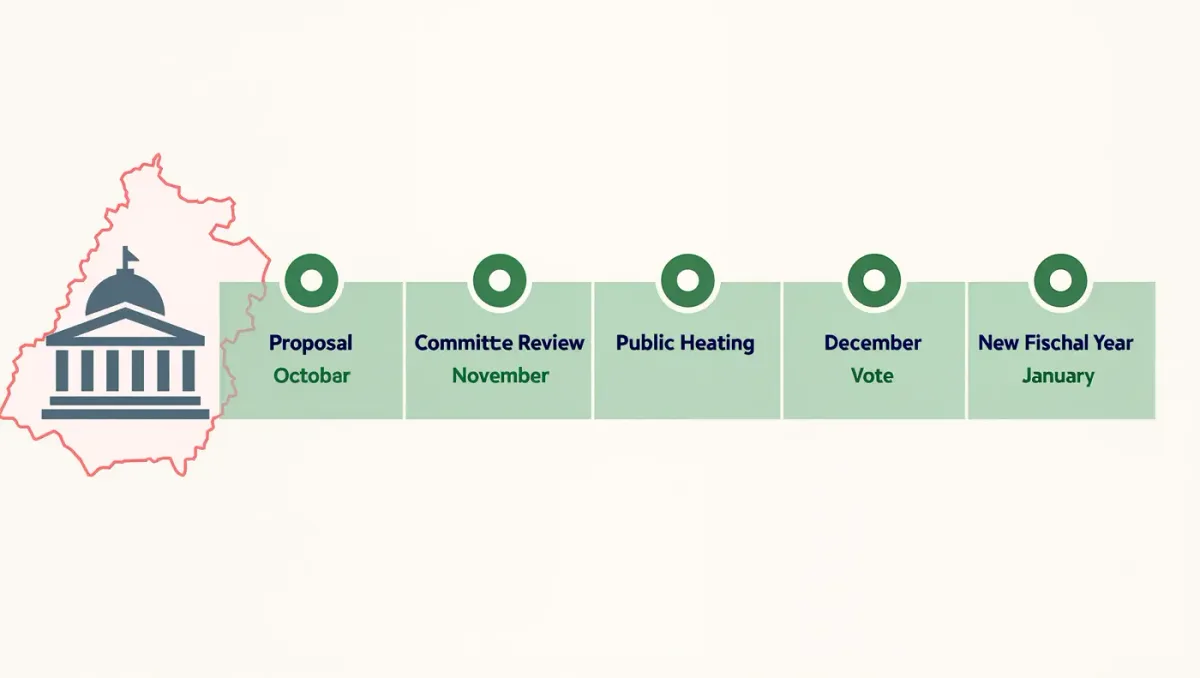
The Rockland County budget follows a fall calendar set by state law and the county charter: the county executive submits a proposed budget, usually in mid-to-late October, the county legislature reviews and amends it through committee meetings in November, a public hearing is held on the proposal, and the legislature adopts a final budget before the fiscal year begins on January 1.
That window — roughly ten weeks between the executive's proposal and the legislature's vote — is the entire period when Rockland residents can weigh in on county spending. Here is what happens in it, and where you fit.
The calendar, step by step
- Summer and early fall: county departments and outside agencies — from the sheriff's office to cultural organizations and subcontracted nonprofits — submit funding requests to the executive's budget office, which assembles the proposal behind closed doors.
- Mid-to-late October: the county executive delivers the proposed budget, typically in a formal presentation. The document, with revenue projections and the proposed property tax levy, becomes public at this point.
- Early November: the legislature's budget committee, and sometimes its standing committees, hold work sessions going department by department. Commissioners answer questions; the sessions are open to the public and streamed.
- November: the legislature holds the statutorily required public hearing on the proposed budget, with advance notice published. Residents and agency advocates speak, usually a few minutes each.
- Late November into December: the majority and minority conferences negotiate amendments, and the full legislature votes. Amendments need majority approval; changes to the executive's proposal are amendments to the tentative budget, and the final adopted document goes back to the executive, who can sign it or veto specific items — with the legislature able to override a veto by supermajority.
- Late December: the county certifies its tax levy so tax bills can be prepared for the new year, and the budget takes effect January 1.
Exact dates shift from year to year depending on when the executive delivers the proposal, but the sequence does not. The county publishes the hearing notice with the specific date and location once the legislature sets it.
What the executive proposes versus what the legislature decides
Under the Rockland County Charter, the county executive holds the pen first: only the executive submits a complete proposed budget, and the legislature cannot simply wait for one — the charter's timeline forces the document into public view by the middle of fall. The proposal includes department operating budgets, debt service on county bonds, the share of sales-tax revenue the county passes to towns and villages, and the property tax levy that closes any gap.
The legislature holds the last word. It can restore cuts, add spending, reduce the levy, or shift priorities — and it historically makes its most visible changes after the public hearing, when commenters have flagged what the proposal would do to specific programs. If the executive vetoes a legislative change, the legislature can override with the required supermajority, which is why the December session's vote counts matter as much as the debate.
Related stories: How the Rockland County Legislature works: 17 seats, votes and public hearings · What the Rockland County executive can — and cannot — do.
Where residents actually come in
Three moments are worth putting on your own calendar. The first is the day the executive's proposal drops: the full document is posted, and the revenue and levy numbers in it are what the legislature will spend two months arguing around. Reading even the summary tells you whether the proposal leans on sales tax growth, fund balance, or a levy increase.
The second is the public hearing in November. This is the formal record — speakers get a set time, and the transcript becomes part of the file the legislature works from. Agencies that depend on county funding, from libraries to senior programs to arts councils, pack the hearing; individual taxpayers asking about the levy are fewer and therefore easier to hear.
The third is the legislature's budget and finance committee sessions between the proposal and the vote. These are less scripted than the hearing, and questions asked by legislators in work sessions often preview the amendments that pass in December. Watching one or two sessions tells you how your district's legislator intends to vote.
Why the county levy is only part of your bill
A common confusion: the county budget sets the county share of your property taxes only. Rockland's tax bills also carry town, school, village, fire, water, sewer, and lighting charges, each governed by its own budget process on its own schedule. County government raises the rest of its revenue from the sales tax, which in Rockland is a shared stream — the county distributes a portion back to towns, villages, and the county's towns' school-adjacent funds under a fixed arrangement.
That structure explains the perennial budget debate: because Rockland relies heavily on sales tax rather than property tax, a soft retail year pressures the budget even when property values hold, and proposals to raise the levy draw particular scrutiny.
How to follow it without reading 400 pages
The county posts the proposed budget, hearing notices, legislature agendas, and adopted documents on rocklandgov.com, and legislature sessions are broadcast and archived. The most efficient routine: read the executive's budget message when the proposal drops, watch or attend the November hearing, and check the legislature agenda in December for the budget resolution and any veto-override votes.
For the numbers that affect you personally, the adopted budget's summary tables show the tax levy, the tax rate per thousand of assessed value, and the year-over-year change — the three figures most quoted in the spring when bills arrive.
The system gives residents one hearing and ten weeks of committee meetings. Both are public, both are recorded, and both happen every fall on the same track, which makes the county budget one of the more predictable things to engage with in Rockland government.